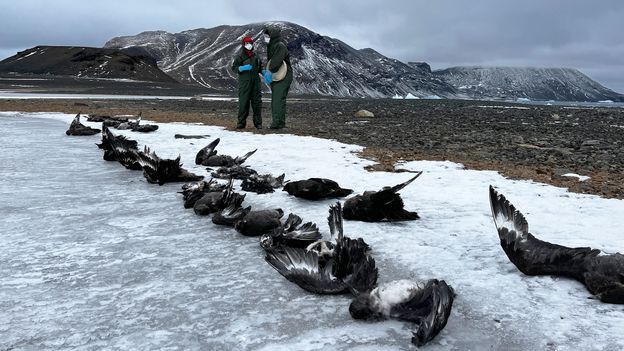
Australia's Southern Sentinel: Unpacking Heard Island's Bird Flu Detections
Australia's vast and pristine wilderness, particularly its remote sub-Antarctic territories, has long been a subject of intense biosecurity vigilance. The recent confirmation of H5 avian influenza (bird flu) in Gentoo penguins on Heard Island, an isolated Australian territory, marks a significant, albeit anticipated, development in the nation's ongoing battle against global disease threats. While the news reinforces the pervasive nature of the H5N1 virus, it also underscores Australia's robust monitoring and preparedness strategies, which are more crucial than ever in safeguarding its unique biodiversity and agricultural sectors.
Heard Island, a volcanic landmass sitting over 4,000km southwest of Perth and 1,700km north of Antarctica, is far from human population centers. Yet, its vibrant wildlife populations, particularly its seabirds and seals, make it a critical focal point for observing the global spread of avian diseases. The detections here serve as a potent reminder that no corner of the world is immune to the reach of highly contagious pathogens.
Understanding the Heard Island Detections: A Critical First for Australia
The Australian government officially confirmed the presence of H5 avian influenza in Gentoo penguins on Heard Island following preliminary test results from the Commonwealth Scientific and Industrial Research Organisation’s (CSIRO) Australian Centre for Disease Preparedness. These samples were collected during a scientific voyage to the island on February 3, 2026. This finding is particularly notable as it represents the first known infection of birds in an Australian external territory.
Prior to this, in November 2025, the disease had already been confirmed in southern elephant seals on the island. The second voyage's findings expanded the scope of infection, with Australian Chief Veterinary Officer Beth Cookson confirming additional detections in:
- Gentoo penguins: The first bird species confirmed.
- Southern elephant seals: Re-confirmed and additional detections.
- Antarctic fur seals: New detections in this species.
This multi-species infection pattern is consistent with the global spread of H5N1, where the virus is known to jump between various bird and mammal species, particularly in densely populated colonies. Despite these findings, scientists aboard the RSV Nuyina observed no signs of ongoing mass mortality events in the areas visited, offering a measure of relief but certainly not complacency.
The Minister for Agriculture, Fisheries and Forestry emphasized that these detections, while significant, do not substantially increase the immediate risk to mainland Australia beyond current elevated levels. However, they serve as a stark reminder of the importance of continuous vigilance and coordinated biosecurity efforts. For a deeper dive into these initial reports, you can read more at
Bird Flu Hits Heard Island: First Penguin Infection in Australia.
The Global Threat of H5N1 and Australia's Remote Frontier
The H5N1 avian influenza virus, specifically clade 2.3.4.4b, is a highly pathogenic and contagious strain that has wreaked havoc across the globe. It has led to the infection and death of millions of seabirds, wild birds, and commercial poultry, causing significant ecological and economic damage. Its spread to the Southern Ocean, an ecosystem previously thought to be more insulated, highlights the unprecedented scale of the current panzootic.
Heard Island's extreme remoteness – situated in the Southern Ocean – might suggest a natural barrier to disease. However, the virus's ability to travel vast distances through migratory bird populations and potentially through ocean currents or infected marine mammals means that even the most isolated locales are vulnerable. The "findings not unexpected" statement from the government reflects a deep understanding among experts about the relentless spread of this particular H5N1 strain. Its presence on Heard Island is consistent with patterns observed in other sub-Antarctic and Antarctic regions.
The introduction of H5N1 to these unique and often isolated ecosystems poses a particular threat. Species like Gentoo penguins and various seal populations, which have evolved without significant exposure to such highly virulent pathogens, may lack natural immunity, making them particularly susceptible. Understanding the pathways of transmission, whether direct bird-to-bird, bird-to-mammal, or via environmental contamination, is paramount for predicting and mitigating future impacts. More details on the spread to these species can be found in
H5N1 Bird Flu Spreads to Gentoo Penguins & Seals on Heard Island.
Australia's Proactive Biosecurity: Strategies for Vigilance
Despite these concerning detections, Australia's H5 bird flu freedom status remains unchanged for its mainland. This critical status reflects the country's rigorous biosecurity measures designed to prevent the entry and establishment of the disease. The Heard Island findings, while external, reinforce the urgency of these measures.
The Australian government is actively investing over A$100 million to strengthen its bird flu preparedness and enhance national response capability. This investment covers:
- Rapid Response Equipment: Ensuring every state and territory has the necessary tools for quick containment.
- Resilience Building: Measures aimed at protecting Australia’s most at-risk native species.
- Research and Monitoring: Supporting Australian experts, including those working in Antarctica, the Southern Ocean, and sub-Antarctic regions, who spend weeks and months away from home diligently monitoring wildlife health.
Environment and Water Minister Murray Watt highlighted the dedication of these researchers, whose work is vital for early detection and understanding the disease's trajectory. This multi-layered approach to biosecurity is not just about border control; it involves active surveillance, international cooperation, and public awareness.
Practical Tips for Enhanced Vigilance:
- For the Public: Report any observations of sick or dead wild birds, especially in unusual numbers, to your state or territory wildlife authority. Do not handle sick or dead birds without proper protection.
- For Poultry Keepers (Backyard and Commercial): Maintain strict biosecurity practices. Prevent contact between domestic birds and wild birds. Secure feed and water sources. Monitor your flock closely for any signs of illness (e.g., respiratory distress, sudden deaths, neurological signs) and report concerns to a veterinarian immediately.
- For Travelers: Be aware of biosecurity restrictions when returning to Australia. Do not bring back animal products, especially poultry or eggs, without proper declaration.
Why Heard Island Matters: Ecological Impact and Future Outlook
Heard Island, alongside the nearby McDonald Islands, constitutes a UNESCO World Heritage Site, recognized for its exceptional natural values, including active volcanism and unique wildlife. It is a critical breeding ground for numerous species of seabirds and marine mammals, making it a hotspot of biodiversity. The presence of H5N1 in this pristine environment raises serious concerns about the potential long-term ecological impacts.
While current observations suggest no mass mortality, the potential for significant population declines exists if the virus establishes itself and spreads widely within these colonies. The vulnerability of isolated populations, which often have low genetic diversity and limited exposure to novel pathogens, makes them particularly susceptible to widespread mortality events.
The ongoing scientific expeditions, like those on the RSV Nuyina, are indispensable. They provide critical data on disease prevalence, transmission dynamics, and the health of these remote ecosystems. This information is vital for informing conservation strategies and understanding broader patterns of zoonotic disease emergence. The Heard Island detections are not merely an isolated incident; they are a critical indicator of the global ecological health and the interconnectedness of our planet. They underscore the need for continued international collaboration in disease surveillance and management, reinforcing that environmental health is inextricably linked to human and animal health worldwide.
The vigilance demonstrated by Australia in monitoring these remote territories and investing in preparedness highlights a proactive approach to a global threat. The insights gained from Heard Island will undoubtedly contribute to the broader understanding of H5N1's spread and its potential implications for wildlife conservation and human health globally.
Conclusion
The detection of H5 avian influenza in Gentoo penguins and seals on Heard Island serves as a powerful reminder of the relentless global spread of the H5N1 virus. While Australia maintains its bird flu-free status on the mainland, these findings in a remote external territory underscore the critical importance of ongoing vigilance and a robust biosecurity framework. Australia's significant investment in preparedness, combined with the tireless work of its researchers and biosecurity experts, positions the nation to respond effectively to evolving threats. The Heard Island detections are not just a local concern; they are a global sentinel, urging continued international collaboration, scientific inquiry, and proactive measures to protect our planet's invaluable biodiversity from the pervasive reach of avian influenza.